Diadumenian’s ‘pennies’ of Nicopolis ad
Istrum
The number of types of one assarion pieces produced at the Nicopolis ad Istrum mint for Diadumenian was much less than that produced at its neighbour Marcianopolis. Though the same main themes and types can be encountered the more exotic reverses are not seen, the mint tending to focus on the more standard images. Like Marcianopolis a number of different denominations were issued bearing Diadumenian’s image, though tarrifed differently. The 3 assaria coins are rare. In general it seems that the 1 (?) assarion coins are slightly heavier than the contemporaneous issues at Marcianopolis, though, of course, this only adds to the confusion in distinguishing between those denominations at that mint.
1 assarion 2.5-4.5g 17-18 mm
3 assaria c. 11.0g 22-23 mm
4 assaria 9.4-14.9g 25-27mm
The largest, 4 assaria, pieces show the most interesting designs, where there was scope for the engraver to include more elaborate portrayals. However, even though the workmanship on these smallest coins was, perhaps, slightly inferior to that seen at Marcianopolis, the overall quality was generally good.
Example 1a Example 1b
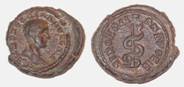
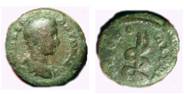
Ob. M OPEL DIADOVMENIANOC K
Rev. NIKOPOLITWN PROC IC Rev. NIKOPOLITWN
Ref. AMNG I
1882f; Ref.
Varbanov (
3.95g, 17mm 3.22g
17mm
Example 1c Example 1d


Ob. M OPEL DIADOVMENIANOC K
Rev. NIKOPOLITWN PROC IC Rev. NIKOLITWN PRC IC
Ref. AMNG I
1882f; Ref.
Varbanov (
4.45g, 18mm 3.60g
18mm
This first example shows the staff of Aesklepios with serpent entwined indicative of the devotion to the healing cult of the area. The obverse legend translates to Marcus Opellius Diadumenianus, Caesar and differs to that used in Marcianopolis for similarly sized coins in that Diadumenian’s actual name is recorded, rather than the Antonius he adopted. The reverse legend translates to ‘(Coin) of the residents of Nikopolis on the (river) Istrus’. Example 1b shows different and cruder dies for the same images. Example 1c uses the same obverse die as Example 1a, with a different reverse die. Example 1d’s reverse die has an error legend where the PO and O have been omitted
Example 2a Example
2b
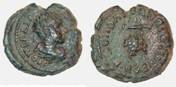

Ob. M OPELLI DIADOVMENIANOC K Ob.
M OPEL DIADOVMENIANOC K
Rev. NIKOPOLITWN PROC ICTΠΩN Rev. NIKOPOLITWN
PROC ICTΠΩN
Ref. BMC 57; AMNG 1/1886; Ref.
BMC 57; AMNG 1/1887;
Varbanov (
3.87g, 18mm 3.27g. 17mm
Examples 2a and 2b show a bunch of grapes on the reverse – indicating the importance of wine production in the region. Both obverses and reverses are different. The image is well constructed with a part of the vine being shown as well. Example 2a shows the only example of a draped bust used for these one assarion coins.
Example 3a Example
3b
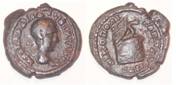

Ob. K M OPEL DIADOVMENIANOC Ob.
K M OPPEL ANTWNIOC
Rev. NIKOPOLI-TWN PROC ICTΠ Rev. NIKO-PO-LITWN
Ref.
Varbanov (
AMNG.1881;
2.96g, 18mm 3.32g,
17mm
Both Examples 3a and 3b show images of the cista mystica opening to the right and left respectively. The latter coin opts for a much simpler reverse legend, simply referring to NIKO-PO-LITWN rather than referencing the river Istrus at all. Example 3a shows the most elaborate design of the basket lid of all the representations of this object – from both this mint and that of Marcianopolis. Either there were different cista designs in use as part of the religious ceremonies or the engravers were allowed some latitude in their representations.
Example 4

Ob. K M OPEL DIADOVMENIA
Rev. NIKOPOLIT-WN PROC
Ref.
Varbanov (
3.94g, 18mm
.
Example 4 shows the winged Eros/Thanatos reverse, where the figure is seen standing to the right with legs crossed.
Example 5

Ob. K M OPPEL ANTWNINOC
Rev. NIKOPO-LITWN
Ref. AMNG
1/1876; Varbanov (
4.90g, 18mm
The reverse of this coin shows Homonia standing, holding in her right hand a patera over altar and in the left hand a cornucopia. This particular example does seem to suggest that the engraving standard is generally lower than that seen at Marcianopolis. In the obverse of this example Diadumenian’s hair is quite crudely depicted, and this is not as a result of wear or strike.
Example 6

Ob. K M OPELLI
ANTWNINOC
Rev. NIKOPOLI-TWN PROC
Ref. BMC54,
SGI2986; AMNG 1878; Varbanov (
2.46g, 16mm
This reverse shows an image of (possibly) Fertility holding a purse in her outstretched right hand and cornucopia in her left arm. Varbanov describes this reverse simply as a woman. Fertility or Ubertas, can be seen on the reverse of Imperial coins of Trebonianus Gallus some time later holding both a purse and cornucopia similar to the pose seen here.
Example 7a Example
7b

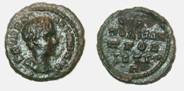
Ob. K M OPPEL
ANTWNEINOC Ob.
K M OPPEL ANTWNEINOC
Rev. NIKO/POLIT/WN PROC/ICTΠ
Ω Rev. NIKO/POLITWN/ PROC
ICTΠ/ Ω
Ref.
Varbanov (
AMNG.1881; Klawans p. 119;
3.25g, 17mm 2.32g,
17mm
Example 7c
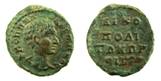
Ob. K M OPELLI
ANTWNINOC
Rev. NIKO/POLI/TWN PR/OCICTΠ
Ref. AMNG 1890; (courtesy of klassische-munzen sales)
3.04g, 17mm
Examples 7a – 7c show a simple legend indicating the city of origin of the coin either in four lines or five lines. Example 7b, in particular is quite crudely manufactured. This may actually be a fault the coining process – the metal being to cold during striking and not allowing enough flow – rather than crudity in the design. However it is notable that for many of the coins of this size ant time from this mint, the lettering is indistinct and difficult to read. To date, I have not been able to find a link between the dies used in the reverses of the Macrinus types of this nature and these types issued by Diadumenian.
Example 8
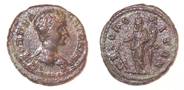
Ob. K M OPPEL ANTWNINOC
Rev. NIKOPOLI-TWN
Ref. BMC54,
SGI2986; AMNG 1878; Varbanov (
2.46g, 16mm
This final example shows Tyche standing left holding rudder in right hand and cornucopia in left arm, with a kalathos on her head. Again, indicating good fortune to the rulers.
There is an additional type reported by Varbanov with a reverse
showing Aesklepios (Varbanov (
While there are examples of these small ‘1’ assarion pieces for Macrinus there appears not to have been much die sharing, certainly much less that that occurring at Marcianopolis. Overall, Diadumenians’ range of reverse types for these small denominations seem to be more diverse than his fathers, probably reflecting his much lower, notional, status in the power structure. Macrinus’ types were limited to only 6 main types – two of which (a square lit altar and the club of Herakles) seem not to have been issued by Diadumenian at all. In general, these small denominations are not available in the same quantities as that of the larger sized coins – leading to the speculation that these were fractions, rather than the base unit by which the daily commerce was conducted.
Malcolm Megaw
July 2007
References
Hristova N. & Jekov G.; Markianopolis – The coins of Moesia Inferior I-III c.A.c.; Southwest University Press, Blagoevad 2006 ISBN 954-680-274-3
Prof. Patricia Lawrence – Private correspondence.