These are some of the bronze or other non‑precious metal coins in my collection, not including ancients or those from India (see Indian Copper Coins).
| Details | Ruler | Image |
Leo III (Լևոն Դ) (1301-1307)Mint: Sis, modern-day Kozan, Turkey
Obverse: ԼԵՒՈՆ ԹԱԳԱՒՈՐ Հ[ԱՅՈՑ] (LEVON TAKAVOR HA - Leo, King of the Armenians.);
Hetoum seated on a "bench" throne (not holding the cross and staff). Reference: Numista 398289 Historical Note: Leo III (often numbered Leo IV in some Western catalogues) ruled during the final decades of the Armenian Kingdom of Cilicia, a period marked by mounting pressure from the Mamluks and internal dynastic strain. His coinage continues the long Hethumid tradition of depicting the reigning monarch enthroned, but the seated figure on this type is actually his father, Hetoum II, whose influence and intermittent co‑rule shaped the political landscape of the era. The mint at Sis remained the kingdom’s principal center of production, and these small bronze kardez pieces circulated widely in the kingdom’s last years before the fall of Sis in 1375. |

|

|
Francis I (1804-1835)Mint: Münze Österreich, Vienna, Austria
Obverse: K·K·OESTERREICHISCHE SCHEIDEMÜNZE· / Imperial–royal Austrian division coin Reference: Numista 3169 Historical Note: The 1816 kreuzer belongs to the early monetary reforms of Francis I, who had recently transformed the Habsburg monarchy into the Austrian Empire in 1804. The Napoleonic Wars had strained imperial finances, prompting a reorganization of small‑denomination copper coinage to stabilize everyday transactions. Vienna remained the empire’s dominant mint, producing vast quantities of low‑value pieces for circulation across the multilingual and economically diverse Habsburg lands. The simple star‑and‑wreath reverse reflects the utilitarian character of post‑war coinage, emphasizing clarity of value rather than dynastic imagery, a contrast to the silver and gold issues of the period. |

|

|
Francis Joseph I (Franz Joseph I) (1848-1916)Mint: Münze Österreich, Vienna, Austria
Obverse: K·K·OESTERREICHISCHE SCHEIDEMÜNZE· / Imperial–royal Austrian division coin Reference: Numista 26810 Historical Note: The fractional kreuzer issues of Francis Joseph I reflect the everyday monetary fabric of the late Habsburg Empire, a period marked by rapid industrialization, expanding rail networks, and the administrative complexity of a multi‑national state. After the 1857 currency reform introduced the decimalized kreuzer system, small bronze denominations like the 5/10 kreuzer became essential for low‑value transactions across Austria and Hungary. Their plain, utilitarian design—value and date within an oak wreath—mirrors the empire’s shift toward standardized, mass‑produced coinage suited to a modern economy. These pieces circulated widely until the introduction of the heller in 1892, which accompanied the transition to the gold‑based krone system. |

|

|
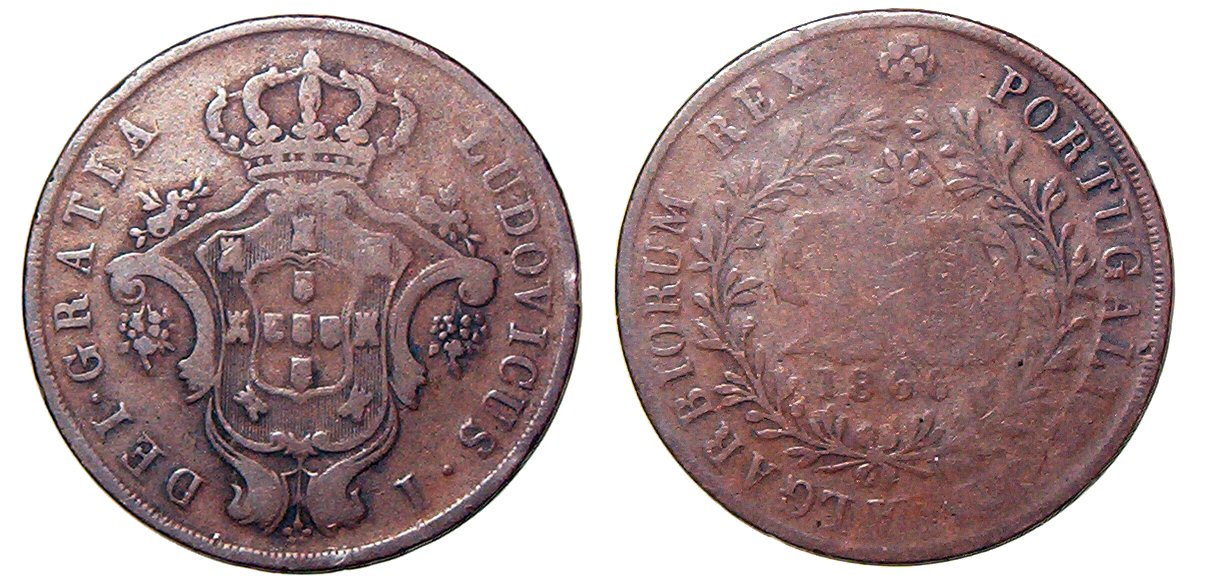
Louis I (Luís I) (1861-1889)Mint: Imprensa Nacional – Casa da Moeda
Obverse: LUDOVICUS I DEI GRATIA / Crowned arms. Reference: Numista 10639 Historical Note: Bronze coinage struck for the Azores under Luís I reflects Portugal’s mid‑19th‑century effort to standardize currency across its Atlantic and overseas territories. Although the islands had long enjoyed certain fiscal privileges, by the 1860s Lisbon sought tighter monetary integration, issuing small‑denomination reis pieces that matched metropolitan types but carried limited local mintages. The crowned arms on the obverse emphasize the centralizing monarchy of Luís I, while the wreath reverse follows the restrained neoclassical style adopted after the liberal reforms of the 1830s. These coins circulated in a period of economic transition for the archipelago, as steamship routes and new trade patterns increasingly tied the Azores to both Europe and the Americas. |

|
|
Brazil — João, Prince RegentMint: Lisbon
Obverse: MARIA.I.ET.PETRUS.III.D.G.P.ET.BRASIL.REGES. / XX / date. Reference: Numista 35907 Historical Note: The countermarked 40‑to‑20 reis issues belong to the turbulent monetary years surrounding the transfer of the Portuguese court to Brazil in 1807–1808. João, acting as Prince Regent for Queen Maria I, oversaw a complex currency environment in which older metropolitan copper coins were repeatedly revalidated, devalued, or counterstamped to meet chronic shortages of small change. The globe reverse with the motto *PECUNIA TOTUM CIRCUMIT ORBEM* (“Money circles the whole world”) reflects Portugal’s self‑image as a global trading empire, even as its Atlantic economy was being reshaped by war, British alliance, and the growing administrative importance of Brazil. These counterstamps allowed worn or outdated pieces to remain in circulation at adjusted values, a practical solution widely used across Portuguese territories during this period. |

|
.jpg)
|
Denmark — Frederik VII (1848-1863)Mint: Altona, Schleswig-Holstein, Germany
Obverse: F VII / date / Crowned King's monogram above a half wreath of oak leaves.
The mintmark is placed below the monogram, below it and the wreath. Date at the bottom Reference: Numista 5210 Historical Note: The 1856 skilling was issued during the reign of Frederik VII, the last absolute monarch of Denmark and the king who presided over the transition to constitutional rule in 1849. Although minted at Altona in Schleswig‑Holstein—then part of the Danish monarchy—the coin reflects a period of administrative strain and territorial tension that would eventually culminate in the Second Schleswig War. Denmark’s currency system still relied on the rigsdaler and its fractional skillings, and low‑value bronze pieces like this were essential for everyday trade across the composite monarchy. The crowned monogram and oak‑leaf wreath emphasize royal authority and national resilience, while the clear, utilitarian reverse design reflects the broader 19th‑century trend toward standardized, machine‑struck coinage. These late skilling issues represent the final decades of the denomination before Denmark’s major monetary reform of 1875 introduced the krone. |

|

|
Denmark — Christian IX (1863-1906)Mint: Altona, Schleswig-Holstein, Germany
Obverse: C IX / date / Crowned Christian IX monogram, King of Denmark from 1863 to 1906. Reference: Numista 4145 Historical Note: The 1899 five‑øre piece belongs to the later years of Christian IX’s reign, a period in which Denmark had settled into constitutional monarchy following the loss of Schleswig and Holstein in 1864. Although the Altona Mint had once served the wider Danish monarchy, by the late 19th century its role was largely administrative, with production increasingly standardized across the kingdom. The porpoise and barley ear on the reverse form one of the most recognizable motifs in Danish coinage, symbolizing the maritime economy and agricultural backbone of the nation. These bronze øre denominations circulated widely during a time of industrial growth, expanding trade, and the gradual modernization of Denmark’s monetary system leading up to the 20th century. |

|

|
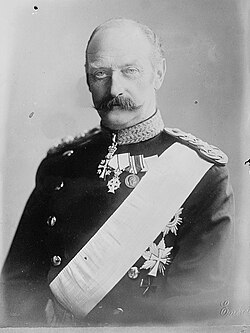
Denmark — Frederik VIII (1906-1912)Mint:Royal Danish Mint (Den Kongelige Mønt), Copenhagen, Denmark
Obverse: F8F / Crowned Monogram Frederik VIII Reference: Numista 9393 Historical Note: The 1907 one‑øre coin comes from the early years of Frederik VIII’s brief reign, a period marked less by political upheaval and more by steady modernization within Denmark’s established constitutional framework. By the early 20th century the Royal Danish Mint in Copenhagen had fully adopted precision machine‑striking, producing uniform bronze øre pieces that supported an increasingly urban and monetized economy. The crowned monogram reflects the continuity of the Danish monarchy, while the clean, circular reverse design aligns with the simplified, practical aesthetic that characterized Scandinavian coinage of the era. These low‑value øre coins circulated widely during a time of expanding social reforms, industrial growth, and Denmark’s gradual transition into a modern welfare‑oriented state. |
|

|
Denmark — Frederik VIII (1906-1912)Mint:Royal Danish Mint (Den Kongelige Mønt), Copenhagen, Denmark
Obverse: F8F / Crowned Monogram Frederik VIII Reference: Numista 5254 Historical Note: The 1907 five‑øre issue reflects the early years of Frederik VIII’s brief reign, a period marked by political stability and steady social reform within Denmark’s established constitutional framework. By this time the Royal Danish Mint in Copenhagen had fully embraced modern industrial minting techniques, producing sharply struck bronze øre pieces that supported an increasingly urban and monetized economy. The crowned monogram on the obverse maintains the traditional royal presence, while the clean, circular reverse design exemplifies the simplified, functional aesthetic that defined Scandinavian coinage at the turn of the century. These mid‑value bronze coins circulated widely during a period of expanding education, public health initiatives, and Denmark’s gradual transition toward a modern welfare‑oriented state. |
|

|
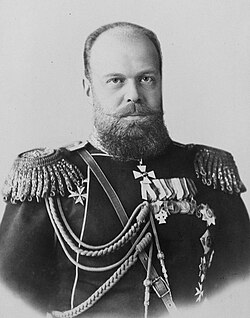
Finland — Alexander III (1881-1894)Mint:Mint of Finland (Suomen Rahapaja), Helsinki, Finland
Obverse: Imperial monogram of Alexander III Reference: Numista 21952 Historical Note: The 1894 one‑penni coin was issued during the final year of Alexander III’s reign, at a time when Finland functioned as an autonomous Grand Duchy within the Russian Empire. Although politically tied to St. Petersburg, Finland retained its own monetary system, mint, and fiscal administration, and the Helsinki Mint produced bronze penni and markka denominations that circulated exclusively within Finnish territory. The imperial monogram on the obverse reflects Russian sovereignty, while the simple, utilitarian reverse design aligns with the practical aesthetic of late‑19th‑century Finnish coinage. These small bronze coins formed the backbone of everyday commerce in a society transitioning from rural agrarian life toward industrialization, and they represent the final phase of Finland’s pre‑Russification monetary stability before the political pressures of the early 20th century. |
|

|
France — Louis XVI (1774-1792)Mint: Paris
Obverse: LUDOV·XVI·D·GRATIA / Portrait of King Louis XVI facing left Reference: Numista 4944 Historical Note: The 1785 sizain, valued at half a sol of an écu, belongs to the final decade of the Ancien Régime, when France’s monetary system still followed long‑established pre‑decimal structures. Struck at the Paris Mint, these small silver fractions were essential for everyday transactions in a kingdom where coin shortages were common and regional currencies still circulated alongside royal issues. The crowned fleur‑de‑lis shield on the reverse represents the traditional Bourbon arms, while the obverse portrait of Louis XVI reflects the neoclassical style favored in the late 18th century. Although minted only a few years before the outbreak of the French Revolution, coins like this continued to circulate well into the 1790s, bridging the transition from royal authority to the radically reformed monetary system of the Revolutionary government. |

|

|
France — Louis XVI (1774-1792)Mint: Paris
Obverse: LUDOV·XVI·D·GRATIA / Portrait of King Louis XVI facing left Reference: Numista 4944 Historical Note: The 1785 sizain represents the low‑value copper currency that underpinned everyday commerce in the final years of the Ancien Régime. While France’s higher denominations were struck in silver and gold, small copper pieces like this were essential for market transactions, wages, and rural trade, especially in a kingdom where shortages of small change were chronic. The Paris Mint produced large quantities of these fractional coins to stabilize circulation, yet they still struggled to meet demand as France’s financial crisis deepened in the 1780s. The crowned fleur‑de‑lis shield and the portrait of Louis XVI preserve the traditional Bourbon iconography that would soon disappear with the Revolution. These late copper issues circulated widely into the early 1790s, bridging the transition from royal authority to the radically restructured monetary system of Revolutionary France. |
|

|
France — First Republic (1792–1804)Mint: Paris
Obverse: REPUBLIQUE FRANÇAISE — Marianne with Phrygian cap. Reference: Numista 27075 Historical Note: The copper 5 centimes of Year 5 was struck during the Directory, a transitional and often unstable phase of the French First Republic following the radicalism of the Terror. Revolutionary iconography remained central: Marianne wearing the Phrygian cap symbolized liberty, civic virtue, and the break with monarchy, while the oak wreath on the reverse evoked republican strength and endurance. France was still grappling with severe inflation, metal shortages, and the need to replace royal coinage with fully republican types, making these large copper pieces an important part of everyday commerce. The dating by revolutionary calendar further reflects the regime’s attempt to redefine time, society, and national identity in the wake of 1789. |

|

|
France — Napoleon III (1852-1870)Mint: MA Marseille, France
Obverse: NAPOLEON III EMPEREUR / BARRE. / date; Portrait facing left, inside beaded circle. Lettering around outside, date underneath Reference: Numista 485 Historical Note: The 1854 five‑centimes piece was issued in the early years of the Second French Empire, when Napoleon III was consolidating his authority and modernizing France’s economic infrastructure. Bronze small‑change coinage had become increasingly important as industrialization accelerated and urban markets expanded, and the Marseille Mint (MA) was one of several regional mints supplying the growing demand for low‑value currency. The imperial eagle on the reverse served as a powerful emblem of the new regime, echoing Napoleonic symbolism while projecting stability and centralized control. These copper centimes circulated widely among workers, artisans, and merchants, forming the everyday monetary backbone of an empire undergoing rapid modernization, urban growth, and ambitious public‑works reforms. |

|

|
France — Napoleon III (1852-1870)Mint: Lille, France
Obverse: NAPOLEON III EMPEREUR / BARRE. / date; Portrait facing left, inside beaded circle. Lettering around outside, date underneath Reference: Numista 320 Historical Note: The 1854 ten‑centimes issue was struck during the formative years of the Second French Empire, when Napoleon III was reshaping France through rapid industrialization, railway expansion, and sweeping urban reforms. Copper and bronze small‑change coinage became increasingly important as wages, market transactions, and urban commerce demanded reliable low‑value currency. The Lille Mint, identified by the letter W, was one of several regional mints tasked with meeting this growing monetary need. The imperial eagle on the reverse—reviving the Napoleonic emblem of authority and military prestige—served as a clear visual statement of the new regime’s legitimacy. These sturdy bronze centimes circulated widely among workers and merchants, forming the everyday monetary foundation of an empire undergoing profound economic and social transformation. |
|

|
France — Napoleon III (1852-1870)Mint: Paris, France
Obverse: NAPOLEON III EMPEREUR / BARRE. / date; Portrait facing left, inside beaded circle. Lettering around outside, date underneath Reference: Numista 19233 Historical Note: This 1854 bronze issue is not a regular circulating 10‑centimes coin but a commemorative token struck under Napoleon III to mark the monument erected by the Lille Chamber of Commerce in honor of Napoleon I. During the early Second Empire, such medals and medal‑like pieces were commonly produced by the Paris Mint to celebrate civic achievements, commercial institutions, and the revival of Napoleonic symbolism. The obverse retains the official imperial portrait used on circulating coinage, reinforcing the continuity of the Bonaparte dynasty, while the reverse inscription commemorates the Chamber’s dedication ceremony at the Lille Bourse on 3 December. These pieces circulated informally as souvenirs and promotional tokens rather than as legal tender, reflecting the era’s blend of imperial propaganda, civic pride, and the growing influence of regional commercial bodies within an increasingly industrialized France. |
|

|
France — Napoleon III (1852-1870)Mint: Paris, France
Obverse: NAPOLEON III EMPEREUR / BARRE. / date; Portrait facing left, inside beaded circle. Lettering around outside, date underneath Reference: Numista 480 Historical Note: The 1862 ten‑centimes piece was struck during the height of the Second French Empire, when Napoleon III was reshaping France through industrial expansion, railway building, and sweeping urban reforms. Bronze small‑change coinage had become essential for the daily life of an increasingly urban and wage‑based society, and the Paris Mint served as the central hub for producing these durable, machine‑struck coins. The imperial portrait by Barre reflects the neoclassical style favored by the regime, while the reverse design—with its clear value and imperial framing—projects the authority and stability Napoleon III sought to associate with his rule. These bronze centimes circulated widely among workers, artisans, and merchants, forming the practical monetary backbone of an empire undergoing rapid modernization and preparing to enter the competitive industrial landscape of mid‑19th‑century Europe. |
|

|
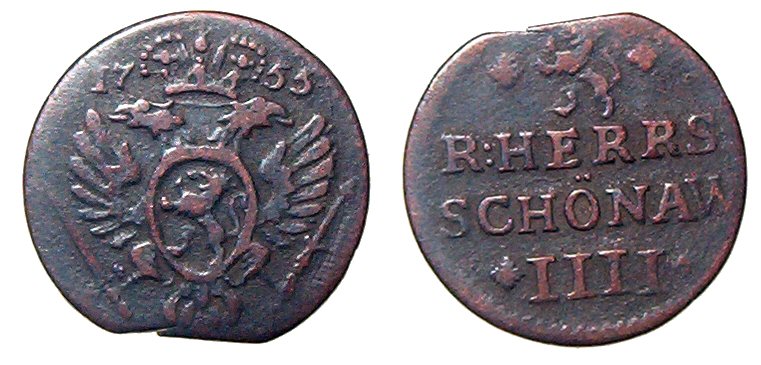
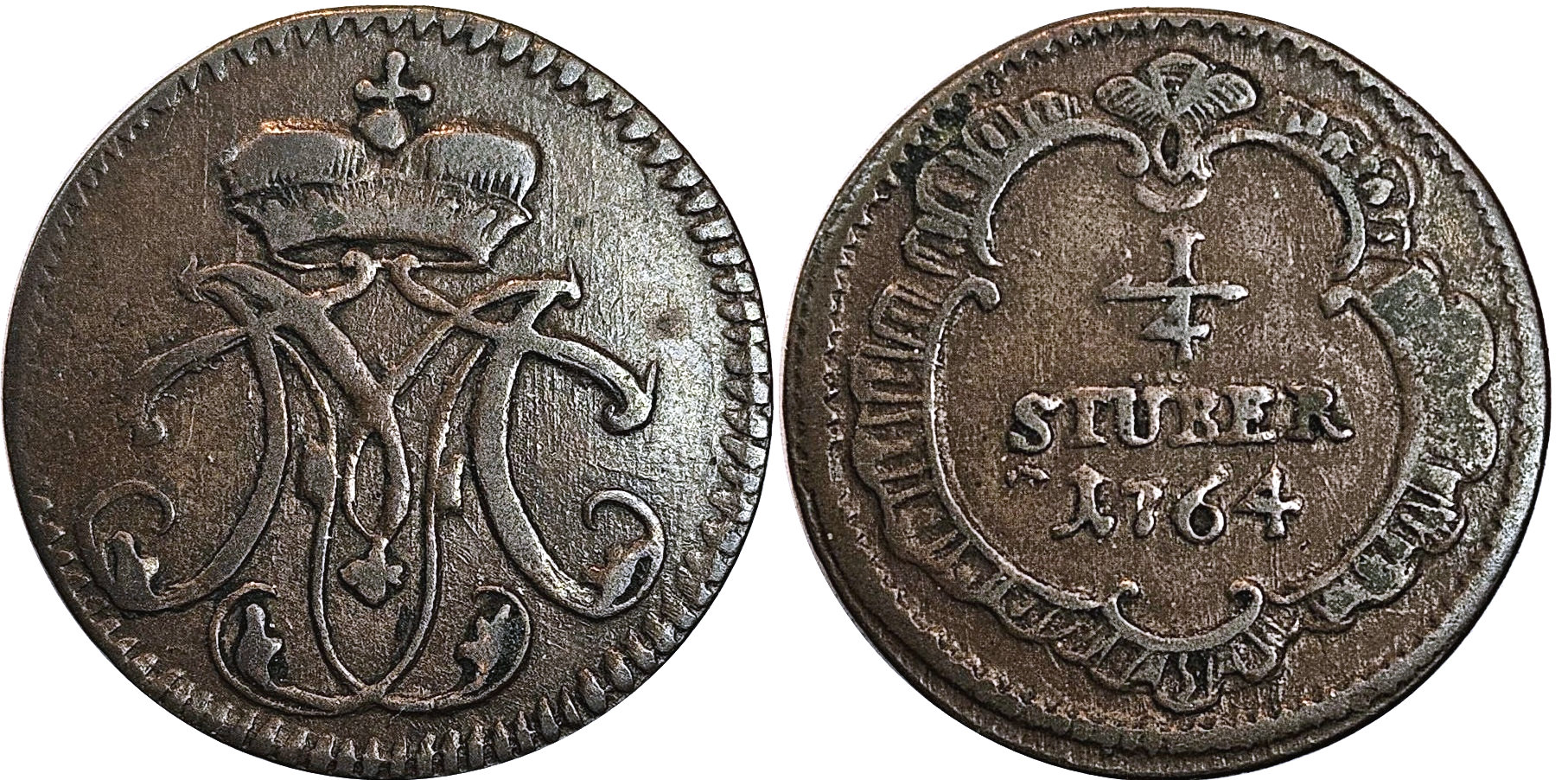
Holy Roman Empire
|

|
|
Holy Roman Empire
|

|
|
Germany - Saxony
|

|

|
Germany - Waldeck
|

|

|
Guernsey
|

|

|
Guernsey
|
|

|
Guernsey
|

|

|
Guernsey
|

|

|
Guernsey
|

|

|
Netherlands
|

|

|
Netherlands
|

|

|
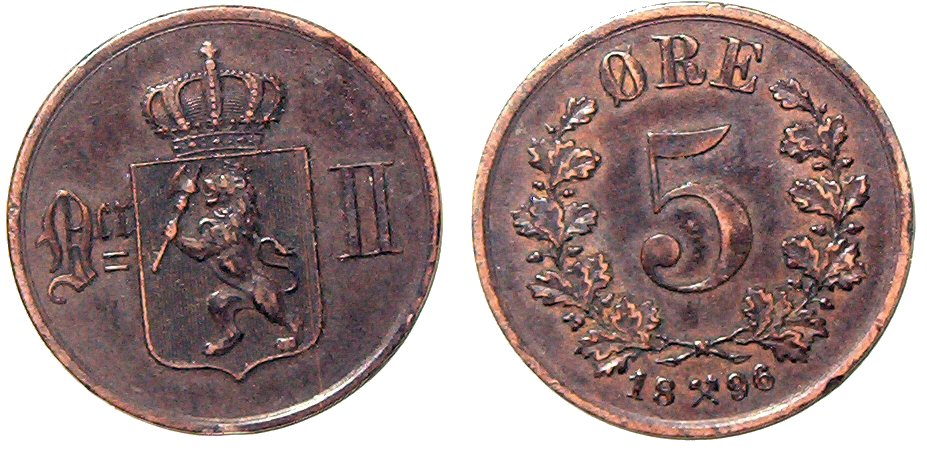
Norway
|

|
|
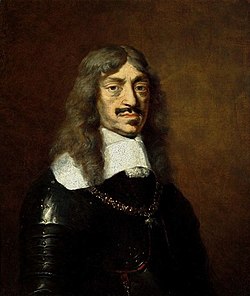
Polish–Lithuanian Commonwealth
|
|

|
Portugal — John V (João V) (1706-1750)Mint: Imprensa Nacional - Casa da Moeda, Lisbon, Portugal
Obverse: IOANNES · V· · DEI·GRATIA Reference: Numista 22136 Historical Note: The 1732 ten‑reis piece was issued under John V, whose long and prosperous reign was fuelled by the immense wealth flowing into Portugal from Brazilian gold and diamond mines. This influx of precious metal allowed the crown to expand its minting operations and modernise the monetary system, while also financing the grand architectural and artistic projects that earned John V the epithet “the Magnanimous.” Low‑value copper denominations such as the 10 reis remained essential for everyday transactions among the urban and rural population, circulating widely alongside the more prestigious gold coinage of the period. The legends on both sides follow the formal Latin style typical of Portuguese issues of the early 18th century, emphasising royal authority and the kingdom’s dual title over Portugal and the Algarves. This coin represents the practical, workaday side of a monetary system otherwise dominated by the splendour of John V’s gold‑rich economy. |

|

|
Portugal — João Prince Regent(1799-1816)Mint:
Obverse:JOANNES.D.G.PORT. ET.ALG.P.REGENS / date Reference: Numista 24350 Historical Note: The 1813 pataco belongs to the late phase of João’s regency, when Portugal was still recovering from the disruptions of the Peninsular War and the royal court’s relocation to Brazil. Copper coinage was repeatedly adjusted to stabilize everyday commerce, and the inscription *UTILITATI PUBLICAE* (“for public utility”) reflects the government’s attempt to reassure the population of the legitimacy and necessity of these fiduciary issues. Although struck in large quantities, many pieces circulated heavily across both Portugal and Brazil, where shortages of small change were chronic. This period’s coinage foreshadows the broader monetary reforms João would oversee after becoming King João VI in 1816. |

|

|
Portugal — João Prince Regent(1799-1816)Mint:
Obverse:JOANNES.D.G.PORT. ET.ALG.P.REGENS / date Reference: Numista 24350 Historical Note: Although dated 1825, this pataco still carries João’s regent titulature, a legacy of the long transitional period following the royal court’s move to Brazil in 1807. By this time João had already been acclaimed King João VI (1816), yet large quantities of fiduciary copper continued to be struck to older patterns to meet persistent shortages of small change across the kingdom. The inscription *UTILITATI PUBLICAE* (“for public utility”) reflects the state’s effort to reinforce confidence in these low‑value issues at a moment when Portugal was navigating post‑war reconstruction, administrative decentralization, and the growing political tensions that would soon culminate in the Liberal Wars. These late patacos represent the final phase of the pre‑reform réis system before the monetary restructuring of the 1830s. |
|

|
Russia — Catherine II (1762-1796)Mint: Ekaterinburg Mint
Obverse:Crowned monogram of Ekaterina II divides date within wreath.· Reference: Numista 8257 Historical Note: The large 5‑kopeck pieces of Catherine II are emblematic of Russia’s late‑18th‑century monetary system, which relied heavily on substantial copper denominations for everyday transactions across the empire’s vast territories. Ekaterinburg Mint, situated in the mineral‑rich Urals, became one of the principal producers of these heavy coppers, drawing on abundant local resources. The crowned monogram on the obverse reflects Catherine’s consolidation of autocratic authority, while the double‑headed eagle on the reverse underscores Russia’s imperial identity during a period of territorial expansion and administrative reform. These coins circulated widely and often for decades, their size and durability making them a familiar presence in both urban markets and rural trade. |

|

|
Russia — Catherine II (1762-1796)Mint: Ekaterinburg Mint
Obverse:Crowned monogram of Ekaterina II divides date within wreath.· Reference: Numista 8257 Historical Note: The 1796 five‑kopeck issue represents the final year of Catherine II’s long reign, struck just before the accession of her son Paul I. Ekaterinburg Mint, supplied by the rich copper deposits of the Urals, remained one of the empire’s major producers of these massive copper pieces, which formed the backbone of everyday monetary circulation. The crowned monogram and imperial eagle preserve the fully developed iconography of Catherine’s mature reign, a period marked by administrative centralization, territorial expansion, and the strengthening of Russia’s industrial base. Late‑dated coins such as this often continued to circulate well into the 19th century, their sheer weight and durability making them a familiar presence in markets across the empire. |
|

|
Spain — Isabella II (1833-1868)Mint: Segovia
Obverse:ISABEL 2ᴬ. POR LA G· DE DIOS Y LA CONST· / 8 M. / date· Reference: Numista 4402 Historical Note: The 1842 eight‑maravedís issue was struck during the regency period that followed the First Carlist War, when the young Isabella II had only recently been proclaimed queen. Spain was undergoing intense political turbulence, alternating between liberal and moderate governments while attempting to rebuild its finances after years of conflict. The Segovia Mint—famous for its historic water‑powered machinery—continued to produce low‑value copper coinage essential for everyday commerce. The legends emphasize both divine right (*por la gracia de Dios*) and constitutional legitimacy, reflecting the monarchy’s attempt to balance tradition with the liberal reforms that had secured Isabella’s succession. These late maravedís pieces represent the final decades of the denomination before Spain’s major monetary reforms of the 1850s. |

|

|
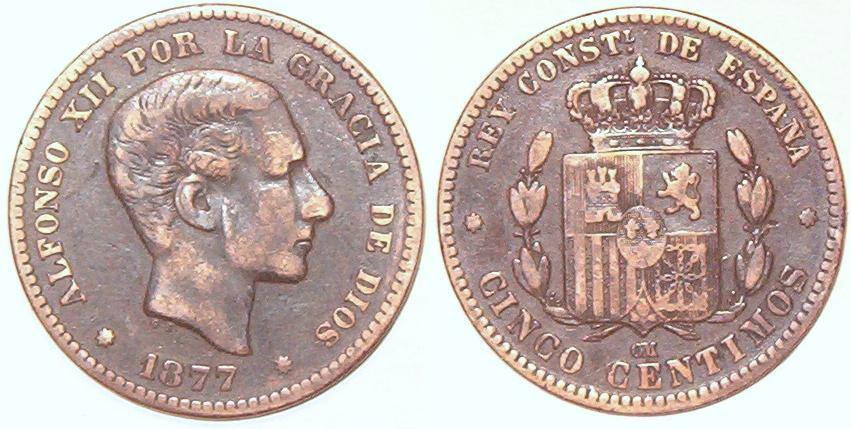
Spain — Alfonso XII (1868-2001)Mint: Barcelona Mint / La Seca
Obverse:ALFONSO XII POR LA GRACIA DE DIOS / G. S. / * date *· Reference: Numista 1246 Historical Note: The 1877 five‑céntimos issue belongs to the early Bourbon Restoration, when Alfonso XII returned to the throne after the upheavals of the Glorious Revolution, the short‑lived monarchy of Amadeo I, and the First Spanish Republic. Spain was attempting to re‑establish political stability and modernize its economy, and the introduction of small bronze denominations formed part of a broader monetary rationalization. The Barcelona Mint (La Seca), one of the most industrially advanced in the country, produced large quantities of these low‑value coins for everyday commerce. The legends emphasize both divine right and constitutional monarchy, reflecting the new regime’s effort to balance traditional legitimacy with the constitutional framework that defined Alfonso’s reign. These pieces circulated widely during a period of cautious recovery and administrative consolidation. |

|
|
Spain — Alfonso XII (1868-2001)Mint: Barcelona Mint / La Seca
Obverse:ALFONSO XII POR LA GRACIA DE DIOS / G. S. / * date *·· Reference: Numista 1246 Historical Note: The 1878 ten‑céntimos issue was struck during the early Bourbon Restoration, only a few years after Spain had endured the Glorious Revolution, the brief reign of Amadeo I, and the First Republic. Alfonso XII’s accession in 1874 marked a return to monarchical stability, and the new regime prioritized modernizing the currency system, replacing the old maravedí‑based structure with decimal céntimos. The Barcelona Mint (La Seca), one of Spain’s most technologically advanced facilities, produced large quantities of these bronze coins to meet the needs of a rapidly industrializing economy. Their straightforward design—value and constitutional title—reflects the Restoration’s attempt to project order, legality, and a balanced constitutional monarchy after a decade of political upheaval. |
|

|